“That’s one thing that’s always been a difference between the performing arts and being a painter, you know. A painter does a painting, and he paints it, and that’s it. He has the joy of creating it, it hangs on a wall, and somebody buys it, and maybe somebody buys it again, or maybe nobody buys it and it sits up in a loft somewhere until he dies. But he never, you know, nobody ever said to Van Gogh, ‘Paint a Starry Night again, man!’ You know? He painted it and that was it.” — Joni Mitchell
These guys are about to attempt the impossible. They’re gonna paint A Starry Night again… and again… 56,800 times.
Their aim is to make a feature film about the life of Vincent van Gogh, every frame hand-painted in his style. These people are the real deal–an Oscar-winning stop-motion producer and some very talented artists. And if their project gets funded, it’ll employ dozens of painters to spend their time painting instead of whatever else they’d otherwise have to do to make a living. A worthy project no matter how you look at it. Backed!
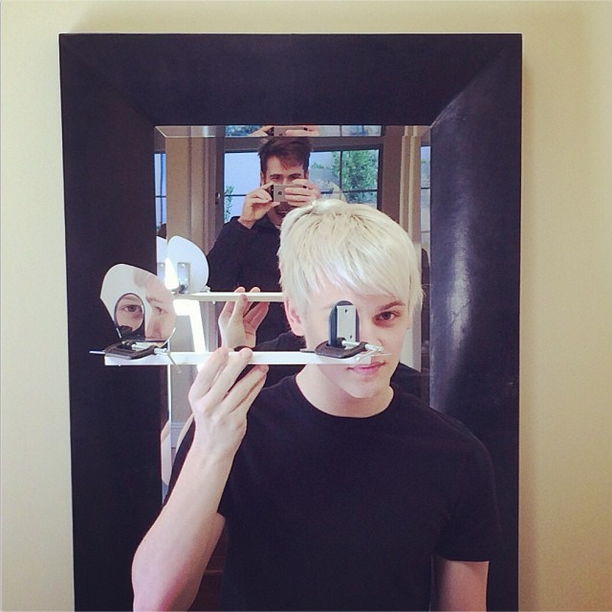
Once in a while I get a random email from someone interested in checking out the Telestereoscope. If they’re local, I usually direct them to the CuriOdyssey museum, where we have a small one installed. But lately I’ve been encouraging anyone who’s interested to try building one for themselves. Our first prototype cost just a few dollars in materials, and can be put together in minutes. (Calibrating it takes a bit longer, but the process is educational, and ultimately quite rewarding.)
Here’s a working telestereoscope built by Will Rogers. He used metal C-clamps and some very interestingly shaped mirrors (maybe reclaimed from an old car?) giving his version a really distinctive style. I love it!
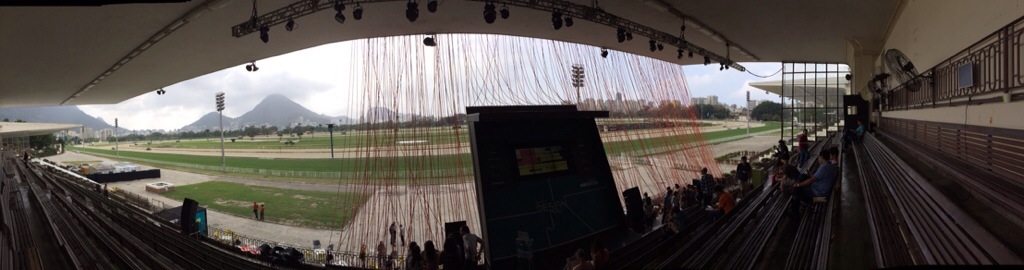
A panoramic view of the event venue by day. Rio de Janeiro’s Jockey Club is, as the name implies, also a racetrack. But a racetrack with quite a view!
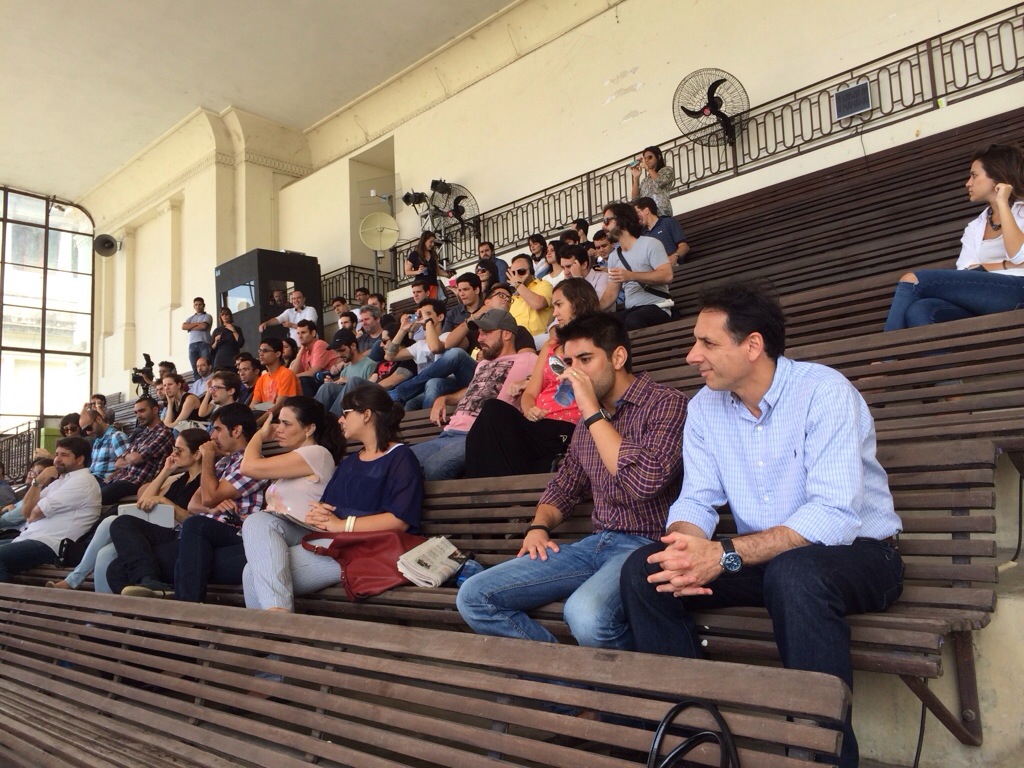
I also did an extra run-through of my talk Friday morning for a small private group, composed of designers from the Rio de Janeiro Creative Club, and publicists from O Globo newspaper. They were a great audience, and asked really interesting questions!
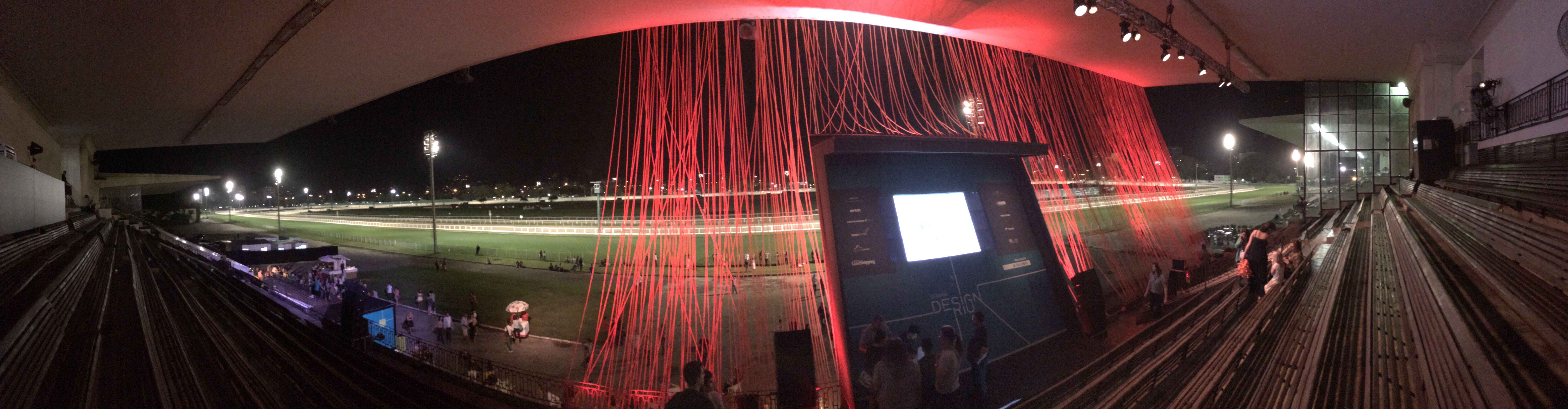
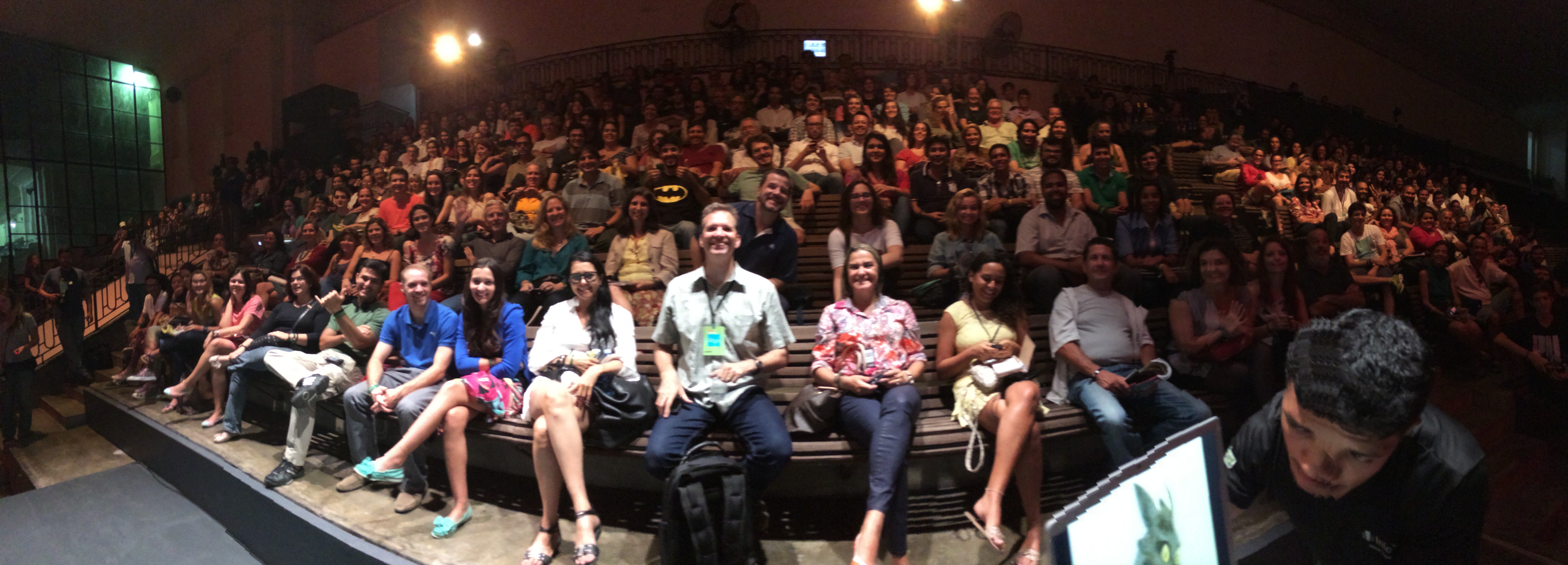
A nice, intimate audience for the practice run.The view from the stands at the Jockey Club by night. We saw a few horse races go by while we were setting up for the talk.A much bigger, sold-out crowd on Saturday night!
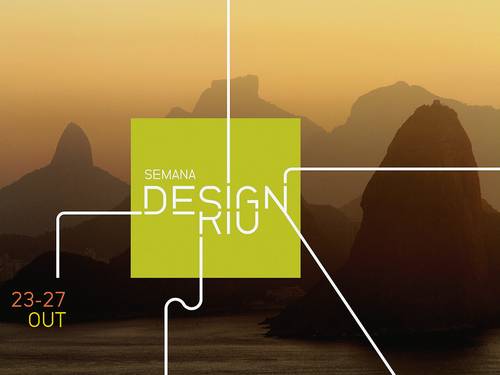
On October 26th I’ll be giving my “Animator as Designer” talk as part of a new annual design event in Rio de Janeiro, Brazil. Here’s an article about the event in the Brazilian newspaper, O Globo. (Or see Google’s English translation of same.) If you’ll be in Rio that week, stop by and say “oi”!
After a long hiatus, Joseph Robertson’s excellent LAB magazine is back, and it features an interesting three-way interview he conducted with me and graphic designer Ian Lynam (author/editor of Parallel Strokes) over five years ago. It’s a fun meander through many of my favorite alphabet-related topics. The rest of the magazine is gorgeous and stimulating, as always. You can download the whole thing as a PDF for free, or buy a hard copy via print-on-demand. (I already have two earlier issues, and they’re handsomely bound and printed, well worth the cover price.) Or, just go straight to our interview. Enjoy!
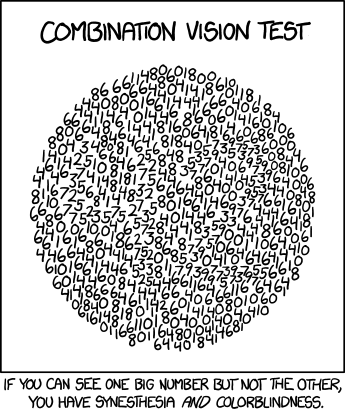
Today’s xkcd seems to have been tailor-made to press all my geeky buttons at once. Take a close look, and see what you see. And when you’re done, read on to see what I see.
My old friend Golan Levin and his collaborator Pablo Garcia have updated the camera lucida for the 21st century. Being a big fan of arcane optical devices, I had to have one. But this would be good for anyone who draws from life or is interested in learning to do so. Judging by the breathtaking rate at which this project’s getting backed, you probably have only a few hours to jump in. Back it here!
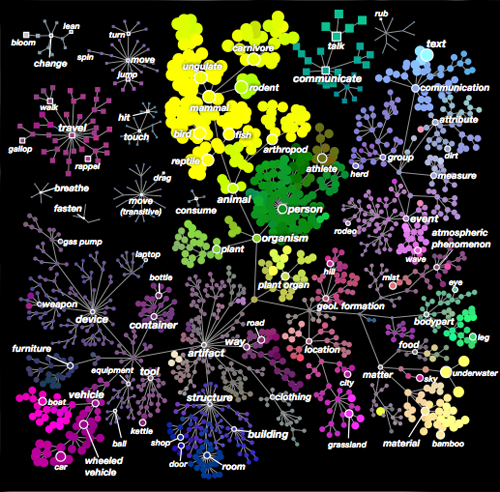
A color-coded map of four dimensions of the semantic space. The branches show “is-a” relationships.
This is one of those moments in science that makes me think I’m so lucky to be alive right now. A team of scientists at UC Berkeley have found a way to map the brain’s representations of objects into a shared semantic space— a multidimensional space in which related things are nearer than unrelated ones. And there’s reason to believe this might be not just a semantic space, but the semantic space: they ran their test on five different people, and found that the first four dimensions of this semantic space were the same for all five subjects–dimensions easily labeled with ideas like moving/stationary, man-made/natural, animate/inanimate, and so on. In other words, the brain’s way of relating different objects might be something we all share at much more than a superficial level. This alone is pretty mind-blowing to me.
As if that weren’t enough, they’ve also created a very cool interactive visualization that shows how all of this plays out on the surface of an actual brain. (That page requires WebGL and a lot of memory, so if you’re reading this on an older device, you might want to just watch the video instead. Actually, you should watch the video anyway, because it’s really well done!)
Go science!
Cassidy Curtis's splendid display of colorful things.