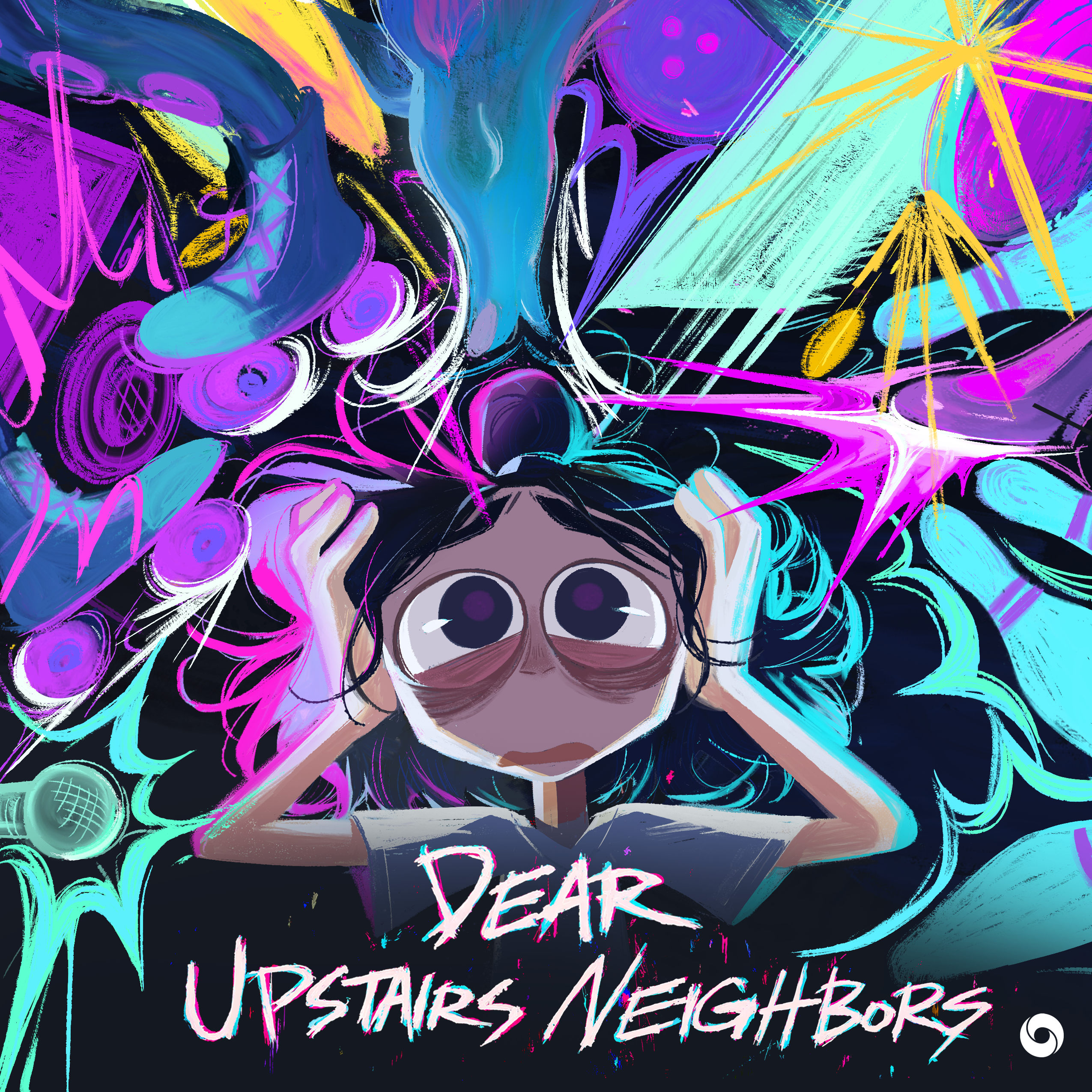
Here’s some exciting news: we made a short film! I worked on this for much of last year, alongside a multitalented and diverse group of artists, engineers, researchers, and musicians. Everyone wore several hats on this project, and for me it was a welcome return to character animation. I got to supervise a small but mighty team of animators (both 2D and 3D) and even animate a few shots myself! This was also a chance for me to dive into working with generative models, discover what they’re actually good for, and help the researchers developing them make them useful to us, so we could wield them as artistic tools. The process was full of really interesting surprises! You can read more about how we did it here…
We’ve been invited to screen the film, and do an hour-long panel about how we made it, at the Sundance Institute’s Story Forum today. I’m thrilled to be back at Sundance (the last time I was here was for Word Wars back in 2004!)
THU was an unforgettable experience. If you ever get the chance to go, I highly recommend it! I don’t have time right now to do a writeup of the full event, but I can tell you about one slice of it: my demo of Big Wet Pixels was a lot of fun!
One big concern I had in the weeks leading up to the event was the logistics. How could I show my system painting a live subject (ideally a volunteer) on stage in front of an audience? For the experience to work well, the setup would have to fit a lot of constraints: I’d have to be able to reach my laptop keyboard and see the screen. My camera would have to see the subject. The subject would have to see what’s happening on the screen, and also see me. And the audience would have to see the screen, the subject, and me. I wasn’t sure there was a solution to this problem in euclidean 3-space that didn’t violate any laws of physics.
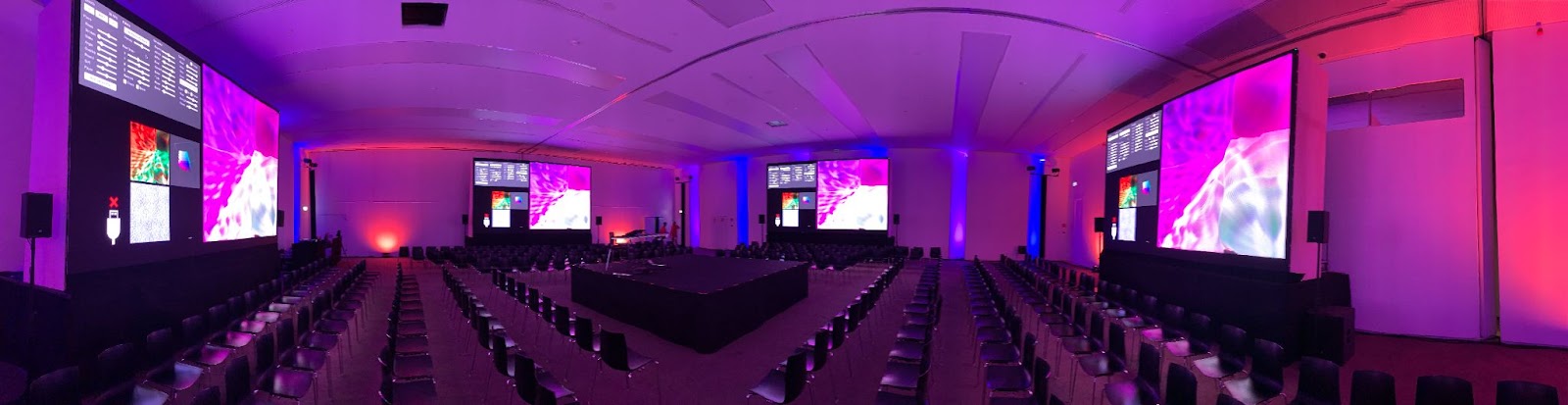
Then I got to visit the venue. And it looked like this:
The stage setup in the BYD Room at the Tróia Conference Center.
A stage in the center, five rows of seats all around, and great big LED screens on all four sides of the room! It was perfect. Better than perfect. It’s immersive, intimate, and equitable: there are literally no bad seats in the house. And from the stage, you feel close to every single person in the audience. This was by far the most innovative setup I’ve ever seen for a conference venue.
It took a couple of tech check sessions to get everything working (note to self: 15 minutes is not enough time to test out such a complex setup!) and I had to make a few last-minute tweaks to my code to make sure it would fit the aspect ratio of the big screens, and add controls to adjust the framing of the subject on the fly (arrow keys are much quicker than trying to adjust a tripod head supporting a long heavy lens!) but when the time came for the actual demo, everything worked perfectly.
Miguel Pólvora, a member of the THU team, helps me test out the system during our tech check the night before my talk. Here you can see the full setup: laptop on the table, Canon 80D on the tripod, connected to the laptop via USB-C, and a chair on the other side of the stage. I especially liked how the colorful room lighting worked to provide a contrasting backdrop for the subject.A particularly nice screenshot of Miguel from our tech check. Look at those gorgeous flow patterns!
I didn’t do much advance planning for how I’d operate the system, I just improvised in response to what was happening in the moment. So we only ended up exploring a sliver of the vast parameter space. But the participants that came up on stage seemed to have a lot of fun with it, posing for the camera, making faces, and using their hands and other props.
OlgaAndryenkoFlavia Chiofalo
The audience asked really interesting questions, and I encouraged them to give me suggestions for what to do with the controls. (In a nod to Zach Lieberman, I told them, “the DJ does take requests!”) Before I knew it, we were out of time, and I had to pack up my gear and leave this beautiful room for the next speaker.
Okay here’s something fun: this goofball will be speaking at the THU Main Event 2024 in Tróia, Portugal! For those who don’t know it, THU is an annual gathering of artists working in film, games, comics, and more. Or, as the organizers describe it: “a 6-day event designed to be a transformative experience filled with innovation, genuine connections, and a creative mindset. It’s the perfect place to take some time for yourself, reset, and fill your mind with innovation and creativity. THU2024 marks the 10th edition, and it promises to be an epic event with an unbelievable lineup of artists and the ultimate creative reboot!”
I’ll be giving talks about animation, non-photorealistic rendering, and my recent research, and (if all goes as planned) also a live demo of Big Wet Pixels with audience participation!
Image excerpted from Understanding Comics by Scott McCloud (1993)
Here’s something new! A group of researchers from MIT, Stanford, Cambridge and UW Madison have put together a new interdisciplinary workshop “at the interface between cognitive science🧠 and computer graphics🫖“, aptly named COGGRAPH. I’ll be on a panel about non-photorealistic rendering, next Tuesday, July 16th, at 11am Pacific (2pm ET). It’s virtual, free, and open to the public. If you’re interested, you can sign up here to see it!
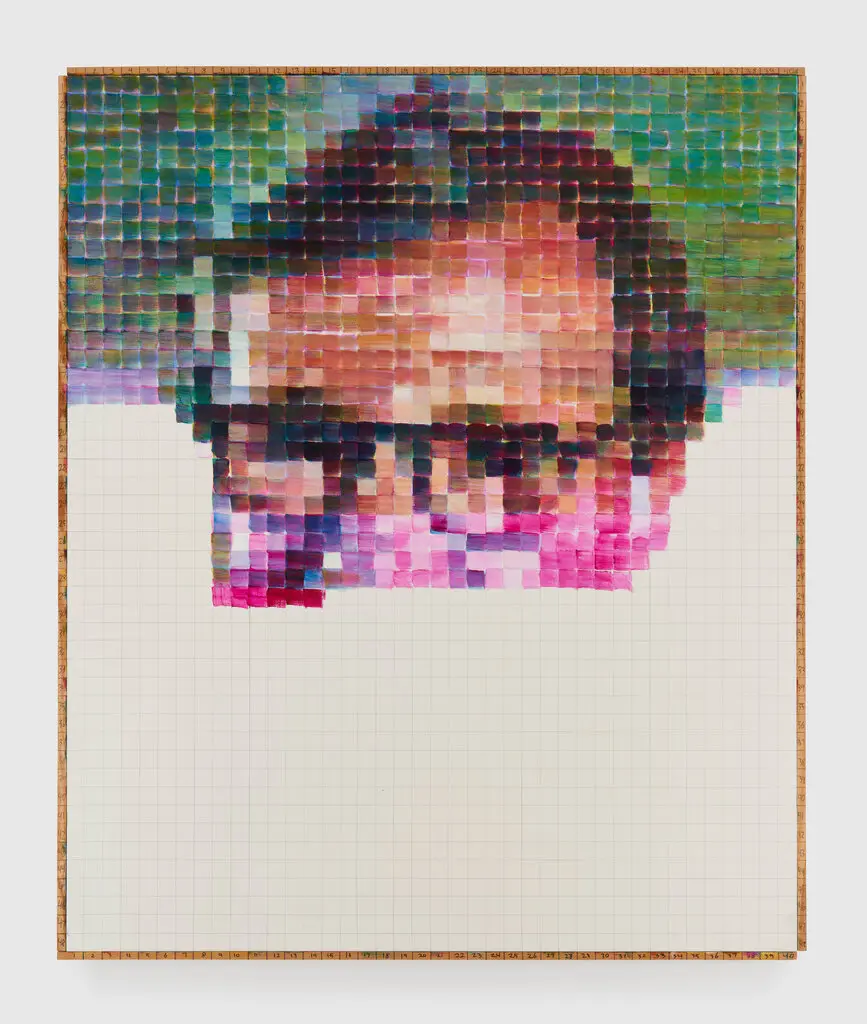
“These full-color portraits and self-portraits employ a palette of only three colors: red, yellow and blue. Layering transparent glazes of paint, Close created an effect of abstract likeness entirely different from that of his previous work. The complex color relationships that unfold in these paintings are visible at the bleeding edges of each square within the grid, where the ragged ends of each individual color are visible.”
When I started working on my “Big Wet Pixels” homage, I had no idea that the artist himself had spent the last few years of his life painting this way. Seeing these paintings now is bittersweet. It would have been wonderful to see what he would have done next had he lived long enough. But it’s also encouraging to see how many different interpretations are possible in this space. And that makes me want to keep exploring it.
ACM SIGGRAPH has posted the video of my April 12 talk about our team’s work on believable acting for autonomous animated characters. This was a really fun one to do. Most conferences limit you to 25 minutes for technical talks, but we’ve always had a lot more material than that! The San Francisco SIGGRAPH chapter’s talk format is comfortably open-ended, so I was able to spend a full hour and go a lot deeper without rushing through it, and still leave plenty of time for Q&A.
Huge thanks to Henry LaBounta and the SF SIGGRAPH organizers for inviting me, and to the audience for showing up and asking such thoughtful and interesting questions!
Hey animation heads, AI enthusiasts, game developers, and curious people of all kinds! Have you ever wondered why video game characters often seem so robotic, compared to animated characters in movies? Have you ever wished for some way to bridge that gap? This is what my team, Synthetic Characters, has been working on at Google Research. I’ll be giving a talk about our paper, Toward Believable Acting for Autonomous Animated Characters, for the San Francisco SIGGRAPH chapter, next Wednesday, April 12, at 6pm Pacific time.
The event is online, free, and open to the public– but if you want to see it, you have to sign up in advance. Here’s the link to reserve your spot!
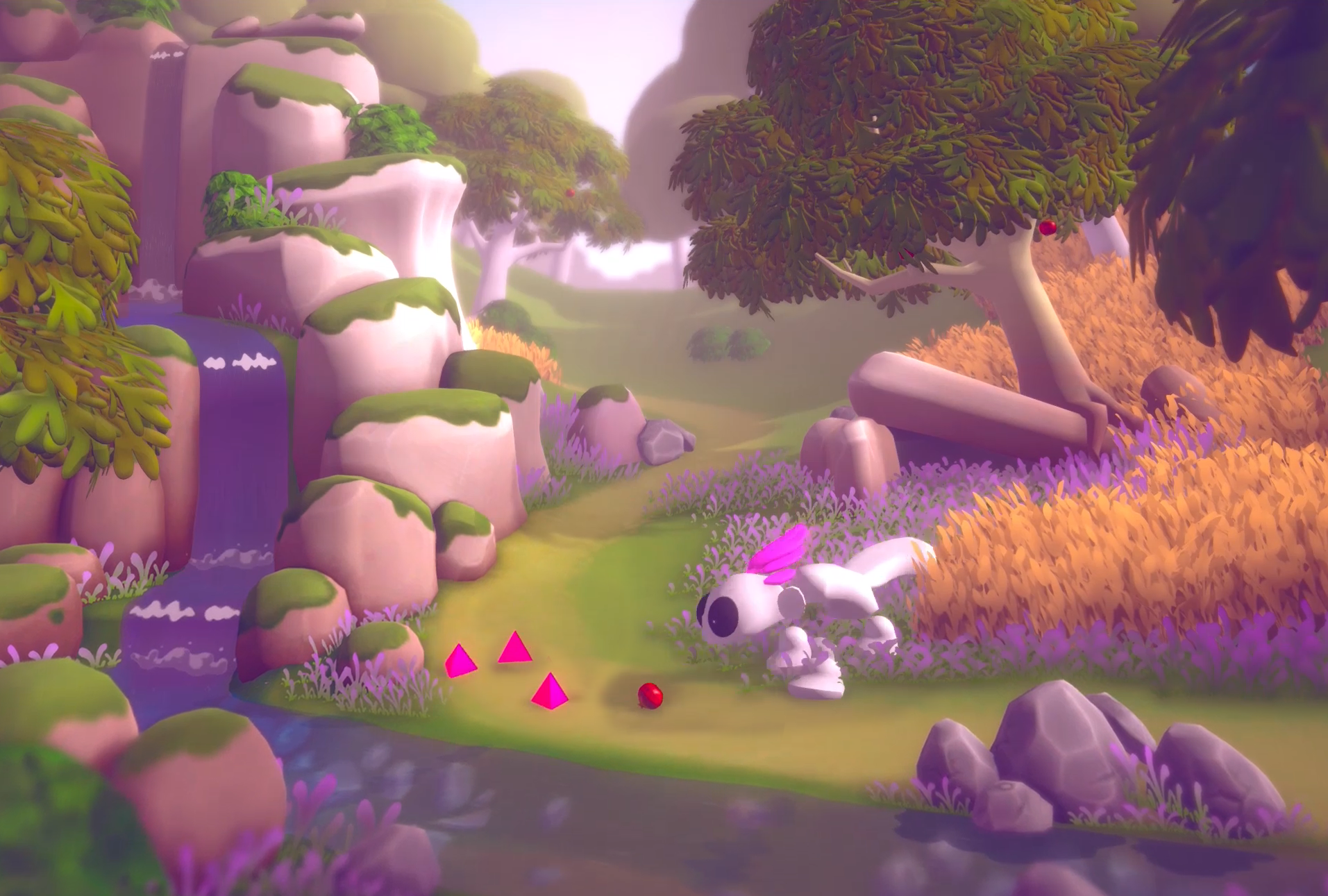
Our autonomous character, Axo, acting on its own motivations.
I’m heading to LA this coming weekend to do a retrospective talk about Spotlight Stories. It’s part of an ASIFA-organized “Animation Day” event at Infinity Festival Hollywood. starting Saturday, November 9th at 10am. (Our friends from Baobab will also be doing a talk about some of their latest work, so it should be a really interesting morning!) Angelenos, swing by and say hello!
Next week I’m heading to Europe for a couple of conferences: FMX (Stuttgart) where Jan Pinkava will be giving twotalks about our work at Spotlight Stories, and Expressive (Genoa) where I’m presenting a paper about our look development work for Age of Sail:Non-Photorealistic Animation for Immersive Storytelling. I’m beyond excited to meet up with old colleagues and new ones, learn about the latest graphics techniques, mangle two foreign languages, and explore some cities I’ve never been to before. If you’ll be at either of these events, let me know!
Cassidy Curtis's splendid display of colorful things.