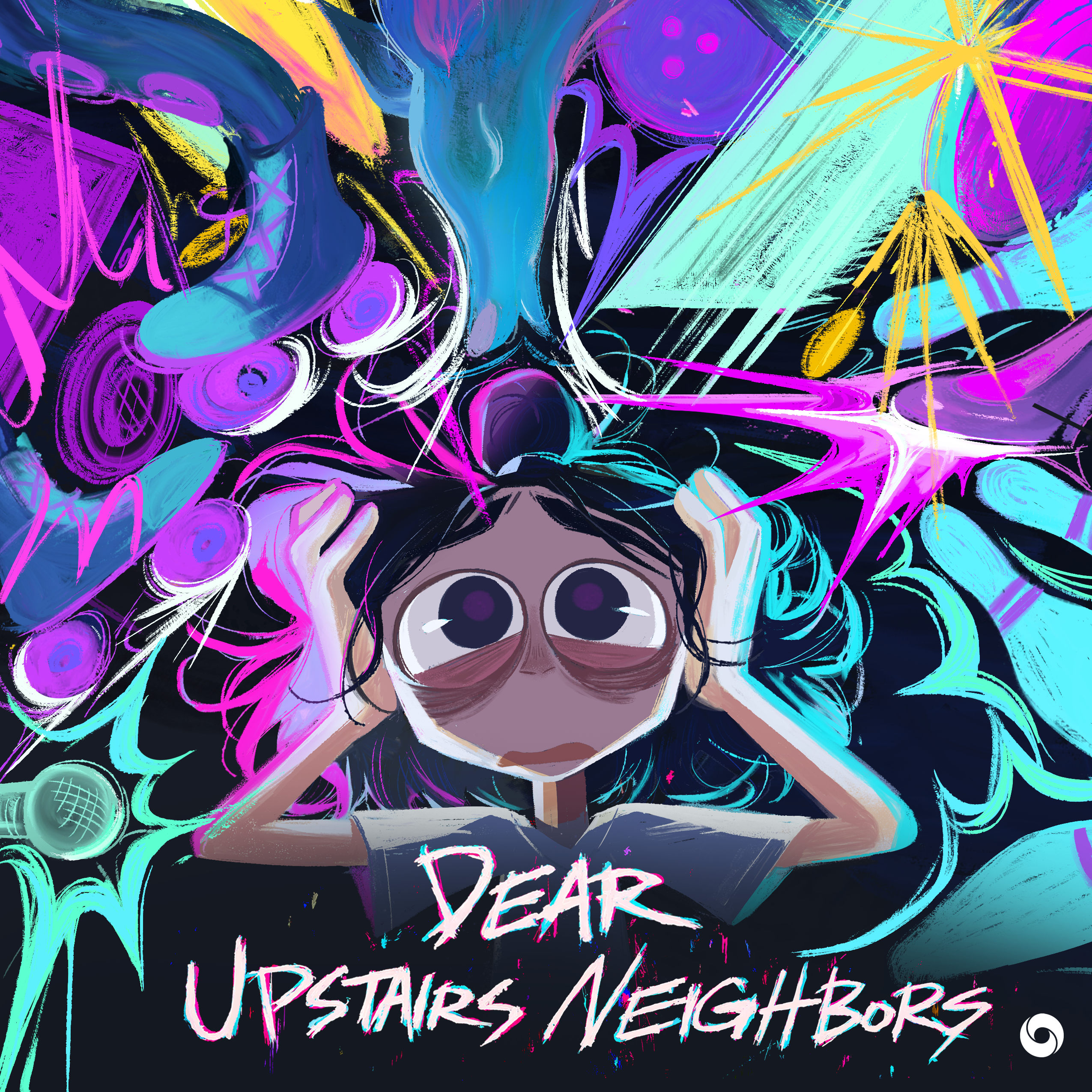
Here’s some exciting news: we made a short film! I worked on this for much of last year, alongside a multitalented and diverse group of artists, engineers, researchers, and musicians. Everyone wore several hats on this project, and for me it was a welcome return to character animation. I got to supervise a small but mighty team of animators (both 2D and 3D) and even animate a few shots myself! This was also a chance for me to dive into working with generative models, discover what they’re actually good for, and help the researchers developing them make them useful to us, so we could wield them as artistic tools. The process was full of really interesting surprises! You can read more about how we did it here…
We’ve been invited to screen the film, and do an hour-long panel about how we made it, at the Sundance Institute’s Story Forum today. I’m thrilled to be back at Sundance (the last time I was here was for Word Wars back in 2004!)
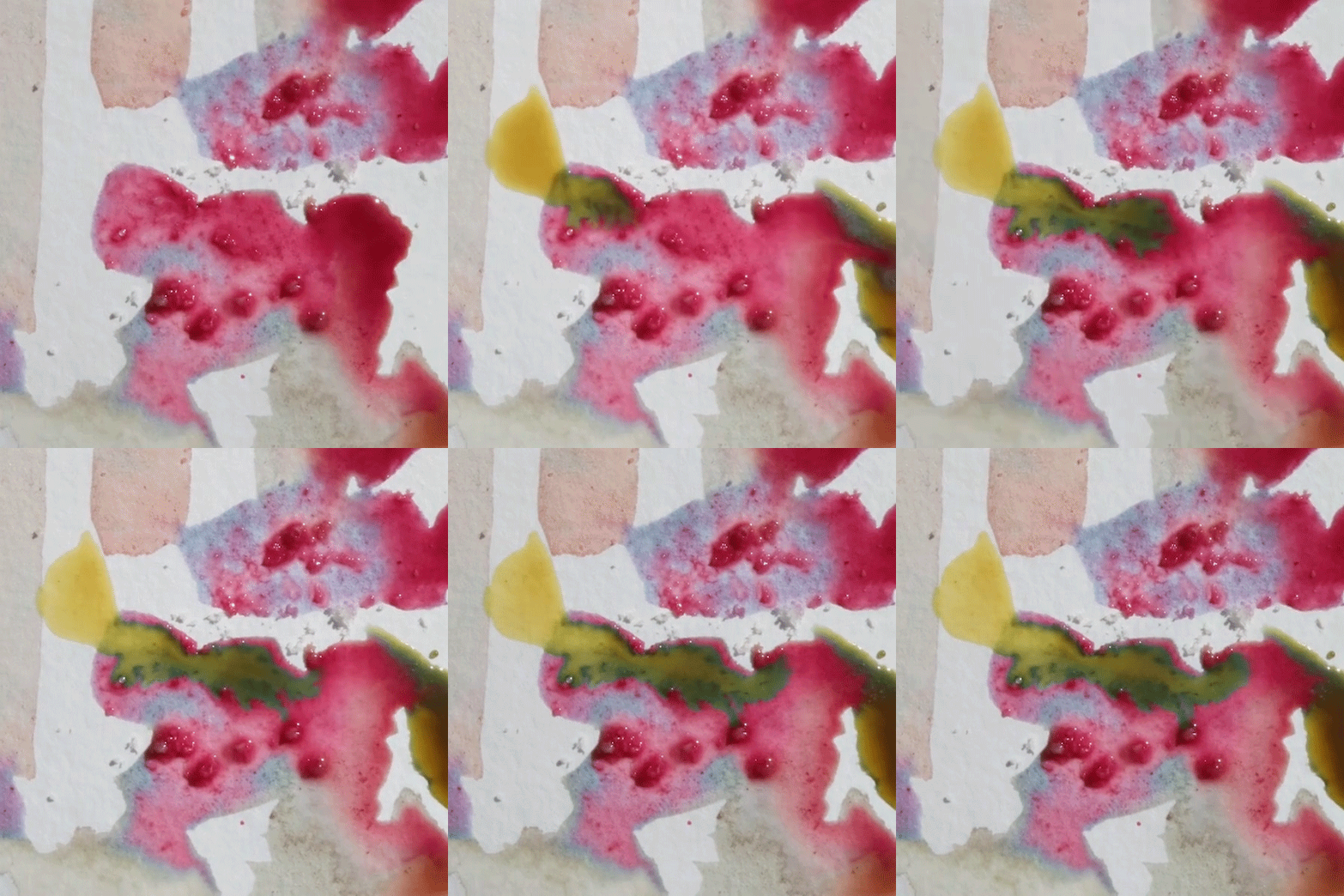
My dear friend Eric Rodenbeck has been experimenting with creating his own homemade inks and paints from natural materials. Some of the inks mysteriously change in texture, and even color, as they dry. After months of looking at Eric’s paintings, I was intensely curious to see how these changes would look as they were happening. So, of course, I had to shoot some timelapse footage.
The inks I used here are hibiscus + lemon (pale red), hibiscus + orange peel (magenta), carrot greens + alum (yellow), and a sprinkling of sea salt for texture. Time span: about 1 hour.
If you pay close attention, something really strange happens about 11 seconds in to the video, when I added some yellow ink: wherever the yellow mixes with the magenta, the mixture turns a deep bluish green! What is going on there?
Magenta + Yellow = Green?
It turns out that hibiscus gets its color from a type of pigment called an anthocyanin, whose structure and color are pH-sensitive. In an acidic environment, it’s red, but when exposed to an alkaline it turns blue. Since the yellow ink is alkaline, it turns the red hibiscus blue on contact, which then mixes with the ink’s yellow pigment, becoming a lovely vibrant green.
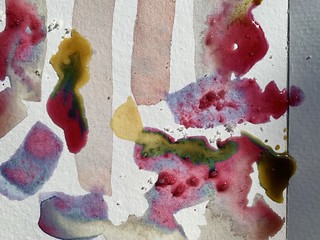
Here are some more photos from the day. Hopefully this will be the first of many such experiments!
The Genuary prompt for day 14 is “asemic”, i.e. writing without meaning, which is something I’ve always loved. I thought it might be fun to try doing that with my watercolor simulation. Reader, I was not disappointed.
When we rerun the simulation with a different random seed each time, it comes to life in a different way. It turns out the Perlin noise that drives the brush movement isn’t affected by the seed, so “what” it writes stays the same, while “how” it’s written changes. The consistency seems to deepen the illusion of intentionality, which makes me super happy.
This isn’t my first time tinkering with procedurally generated asemic writing. That was in 1996, when I was working at PDI in Sunnyvale. There was a small group of us who were curious about algorithmic art, and we formed a short-lived club (unofficially known as “Pacific Dada Images”) that was much in the spirit of Genuary: we’d set ourselves a challenge, go off to our desks to tinker, and then meet in the screening room to share the results. The video above came from the challenge: “you have one hour to generate one minute of footage, using any of the software in PDI’s toolset”. I generated the curves in PDI’s homegrown script programming language, and rendered them using a command line tool called mp2r (which Drew Olbrich had written for me to use on Brick-a-Brac).
I love to tinker with code that makes pictures. Most of that tinkering happens in private, often because it’s for a project that’s still under wraps. But I so enjoy watching the process and progress of generative artists who post their work online, and I’ve always thought it would be fun to share my own stuff that way. So when I heard about Genuary, the pull was too strong to resist.
Here’s a snapshot of some work in progress, using a realtime watercolor simulator I’ve been writing in Unity. Some thoughts on what I’m doing here: it turns out I’m not super interested in mimicking reality. But I get really excited about the qualia of real materials, because they kick back at you in such wonderful and unexpected ways. What I seem to be after is a sort of caricature of those phenomena: I want it to give me those feelings, and if it bends the laws of physics, so much the better. Thus, Impossible Paint.
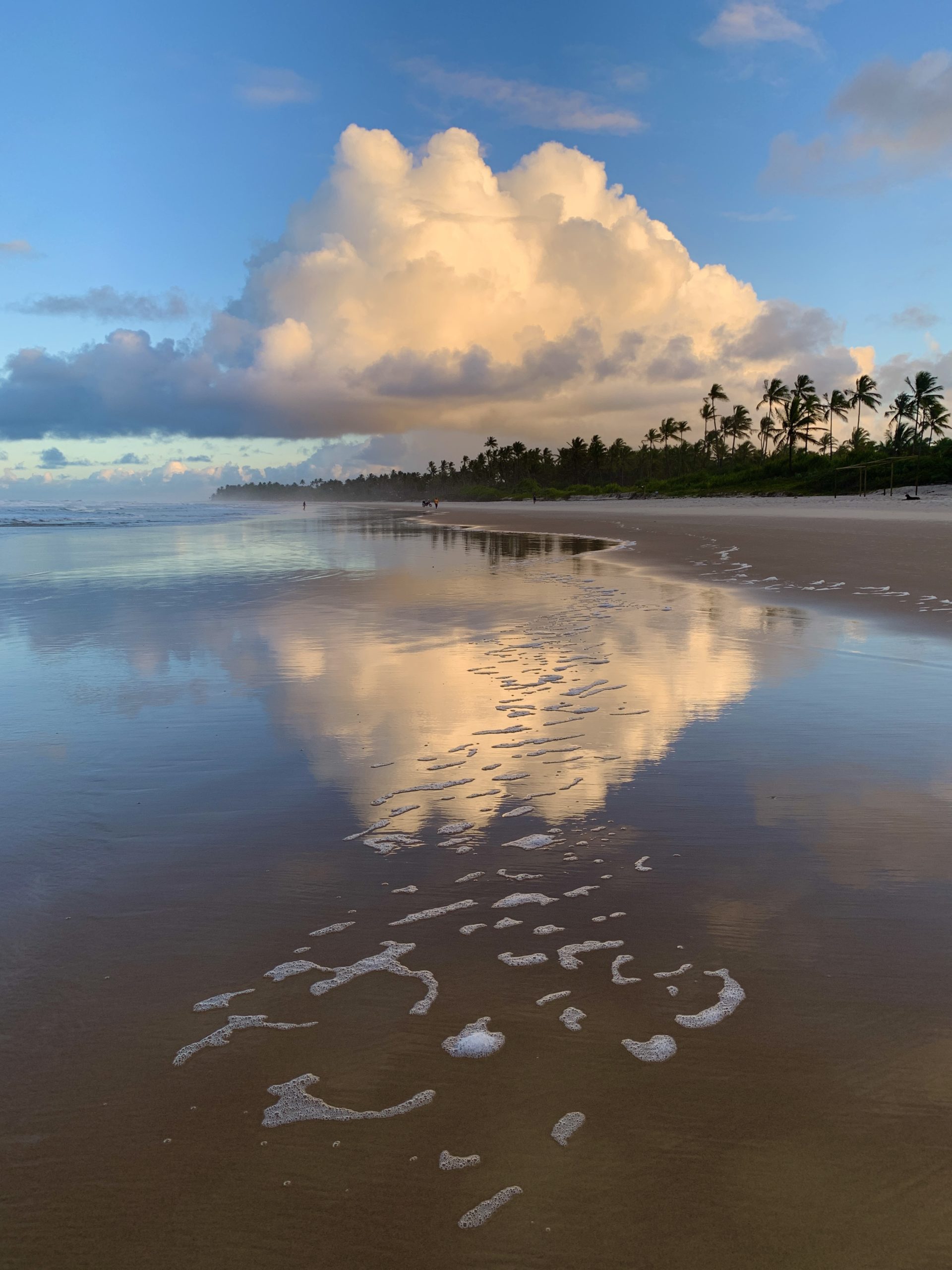
Here in Sargí, Brazil, when it isn’t raining, we get to take a lot of long walks on the beach. One feature we noticed right away were these unusual patterns just on top of the surface: little clusters of wiggly lines made of light sand that contrasted sharply against the dark, damp, compact sand beneath. Some were small and isolated, while others formed dense networks. We wondered out loud: what were these shapes, and where did they come from? Were they the trails of some tiny worm or crustacean? Detritus tossed up from the digging of underground warrens? That was our best guess on the first day. But the shapes were so tiny— barely wider than a few grains of sand— and we never saw any evidence of whatever life we imagined was creating them.
Later in the week, the weather changed, and the shapes changed too. The lines got longer, and they seemed to favor certain directions more than others. In particular, there was a strong breeze blowing up the coast, and the lines were oriented in the direction of the wind. Also there was something vaguely familiar about the way the shapes branched out and meandered, but I couldn’t put my finger on it.
It took a few more miles of walking, staring, and spacing out before it hit me. I knew where I’d seen shapes like this before: senior year of high school, on the screen of my Amiga 1000.
Like a lot of kids at that particular time, I was into fractals. I’d coded up renderers for Mandelbrot sets (in BASIC, super slow!) and other forms of emergent weirdness. And for one class project, I picked diffusion-limited aggregation: a simulation of fractal growth based on randomly meandering particles that stick together when they touch, creating shapes that look like lightning bolts, branching trees or coral fans. (This technique has since been used to great effect by digital artists and creative coders of all sorts.)
Looking down at the sand, I realized what I was looking at was, literally, exactly the process I had simulated (oh so slowly!) on that home computer: an accretion of individual grains of sand, propelled by the wind until they hit an obstacle, at which point they stick firmly in place.
Here are a few more photos of these patterns. Having an idea of how they’re formed doesn’t make them any less fascinating—in fact, it only raises more questions, like: could you “read” the history of wind since the last high tide by analyzing these shapes? Just how much information is encoded in their twisty branches?
I wish I had more time to spend on this (not to mention, shoot some timelapse!) but we leave Sargí tomorrow. As we’ve said many times this trip, “deixa pra próxima.”
This past January I had the incredible good fortune to fall sideways into a wonderful graphics research project. How it came about is pure serendipity: I had coffee with my advisor from UW, who’d recently started at Google. He asked if I’d like to test out some experimental sketch-based animation software one of his summer interns was developing. I said sure, thinking I might spend an hour or two… but the software was so much fun to use, I couldn’t stop playing with it. One thing led to another, and now we have a paper in SIGGRAPH Asia 2020!
Have you ever wished you could just jot down a 3D character and animate it super quick, without all that tedious modeling, rigging and keyframing? That’s what Monster Mash is for: casual 3D animation. Here’s how it works:
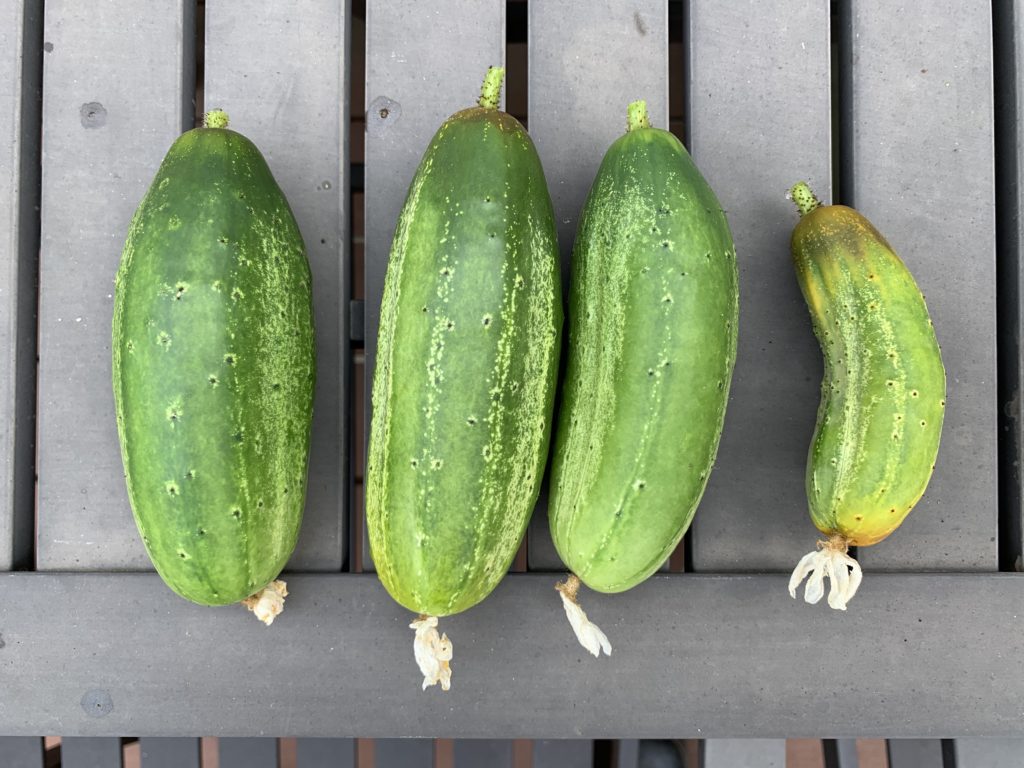
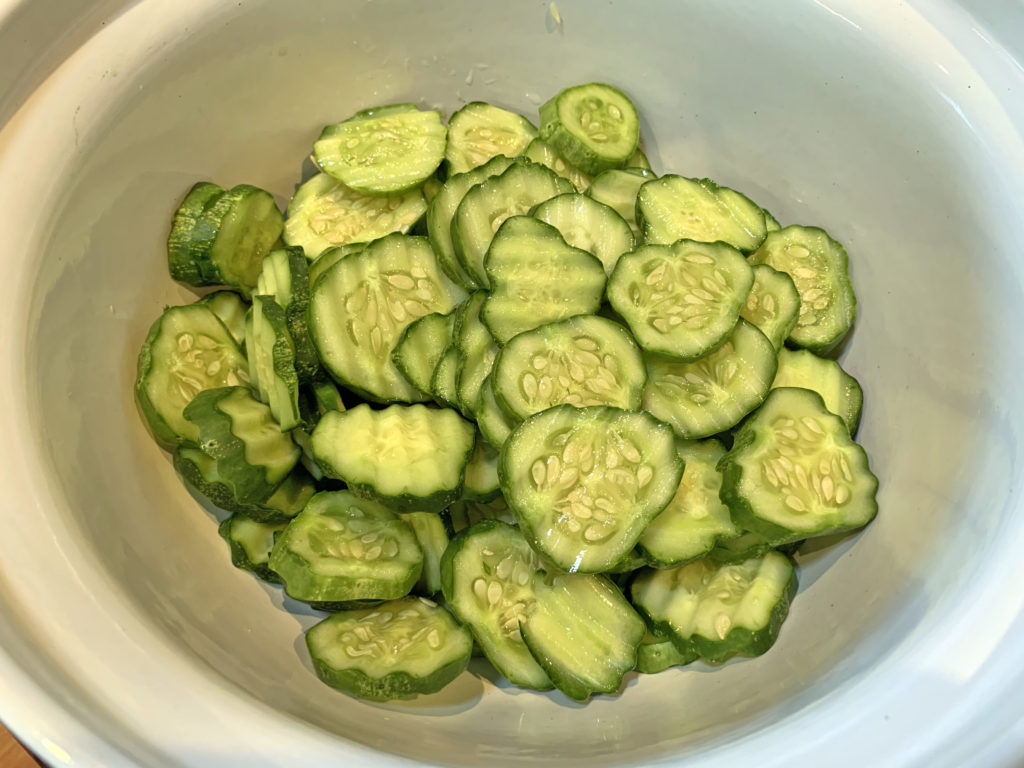
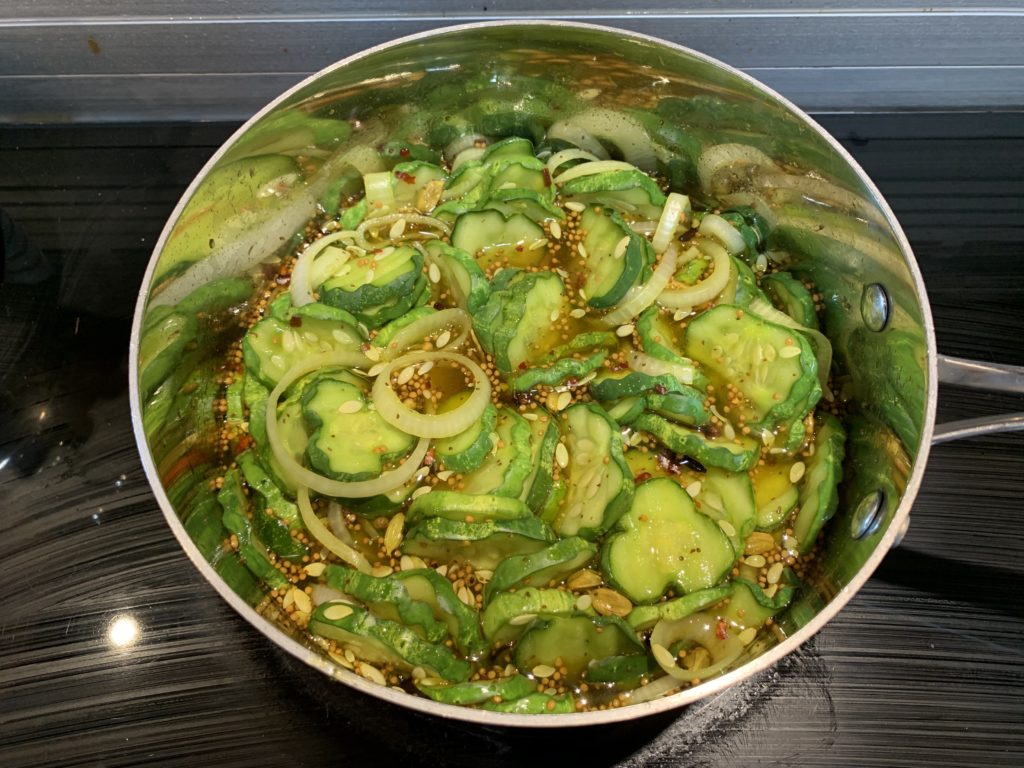
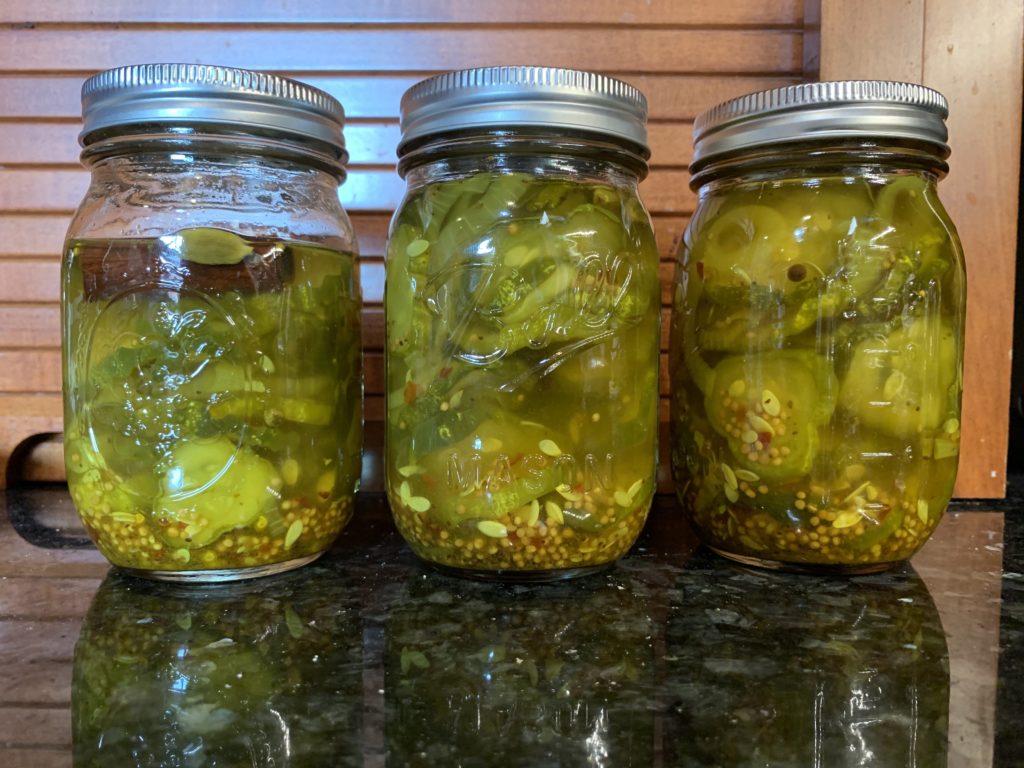
When life gives you gherkins, you make bread-and-butter pickles. At least, that’s what I’ve been doing. I started with this recipe, but as usual, had to modify it based on what we happened to have in our spice rack. I made a few rookie moves, like using the mandoline bare-handed (and let me tell you, that’s a mistake you’ll only make once. Those things are vicious!) But the pickles are so worth it. Sweet and spicy, great with a sandwich, or just straight out of the jar in your pyjamas (not that I’d ever do that, no sir.)
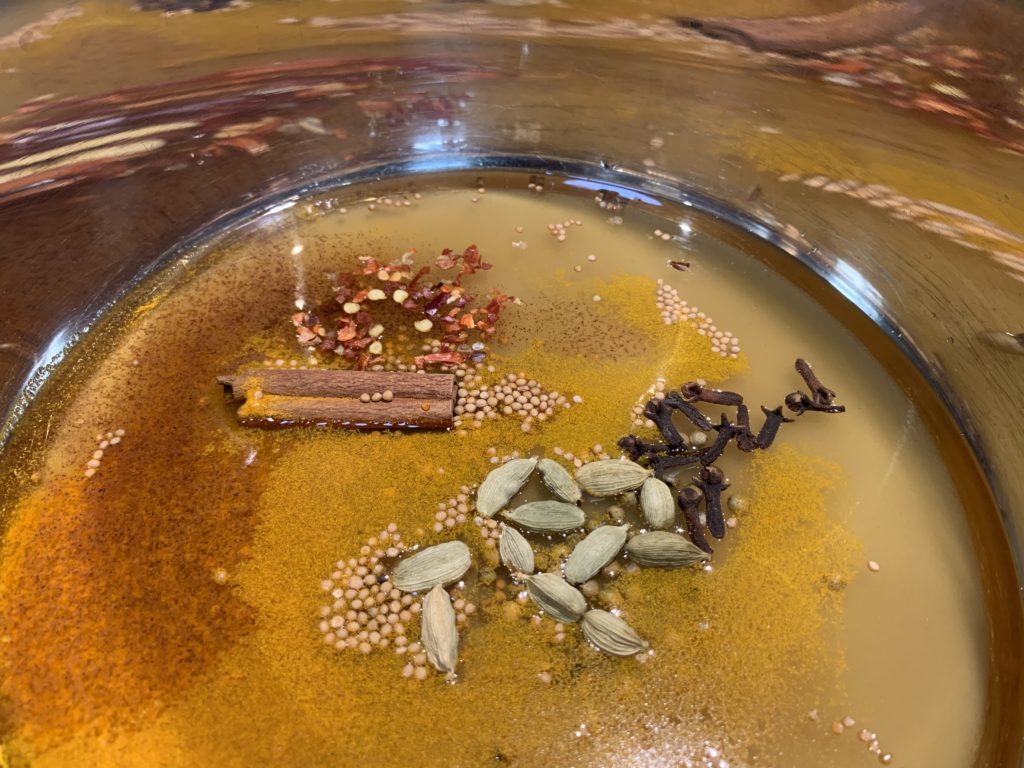
These fresh gherkins have an amazing flavor, almost sweet, even the weird-looking yellow ones.Finally got an excuse to use the zigzag blade on the mandoline!Cinnamon, turmeric, clove, cardamom, mustard seed, white peppercorns, chili flakes.Two 5-inch gherkins, with 1/2 cup of pickling syrup, will just about fill one pint jar.
Our new hand-built garden enclosure seems to be doing its job perfectly: we used wire mesh (or hardware cloth as the pros call it) with 1/2″ holes, too small for rats and mice to crawl through, but still plenty of room for the bees that have been happily pollinating our cucumber flowers.
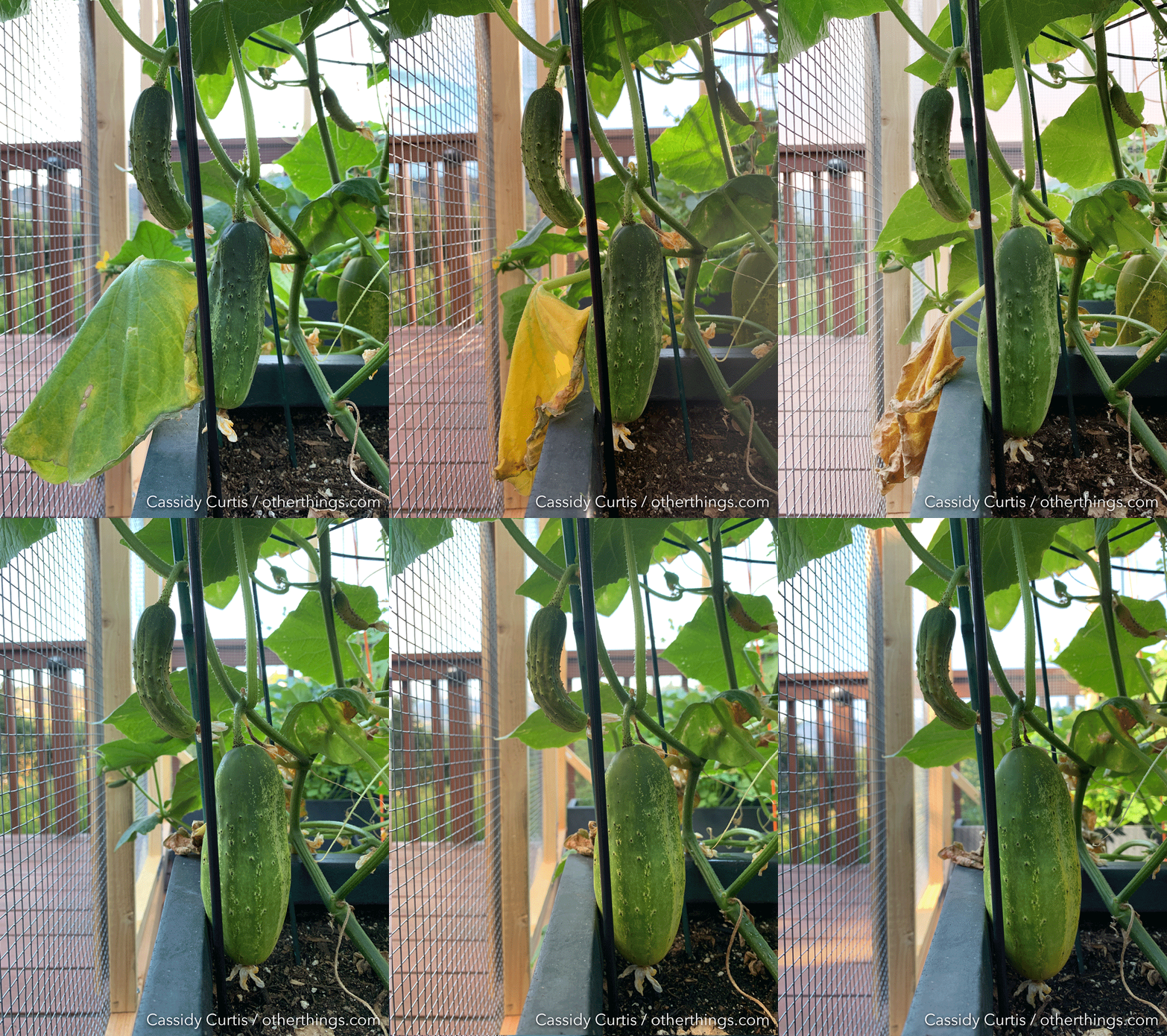
Vegetable gardening and timelapse photography turn out to be an amazingly good match, because they both seem to make me pay attention to tiny details that would otherwise escape my notice. I never thought much about male and female flowers before, but on this gherkin plant it’s really obvious which ones are which: the males have pointy petals, and the females come equipped with a proto-fruit, ready for seed. Much less obvious is how they behave after pollination: some fruits grow, some shrivel up immediately, and others grow for a while, and then seem to give up halfway and start shrinking again. (I’ve read that this last case is what happens when there are some fertilized seeds, but not enough to fill the entire fruit.)
Here’s that big gherkin from the timelapse above. It was delicious.
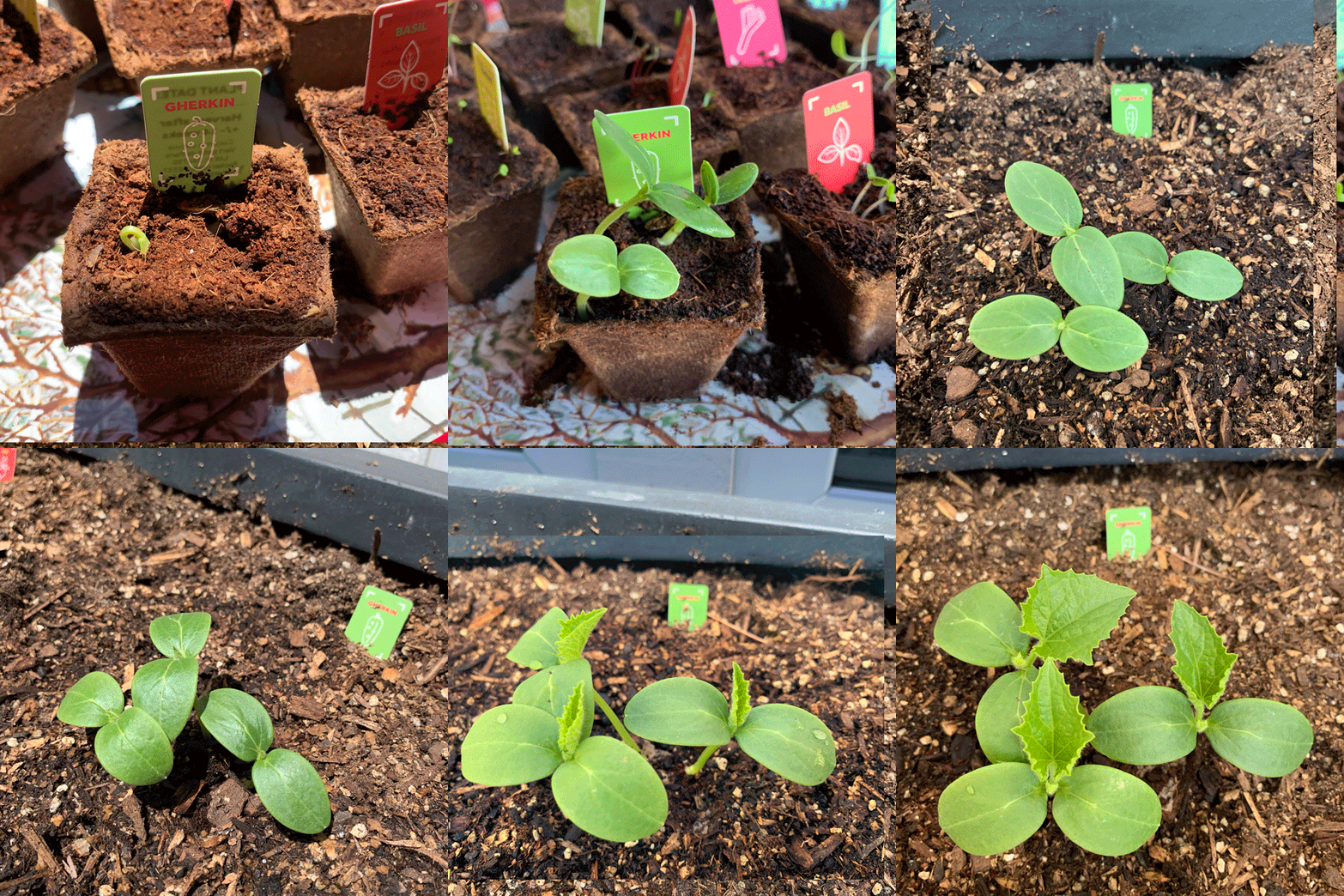
I’m blown away by how fast the gherkin plant has grown. In just a few weeks’ time it exploded to ten times its original size, and it hasn’t stopped. On a hot day it can grow 2 inches taller. So far the tree rats have left it alone– our lettuce was not so lucky– but with fruit like this on the vine, I don’t know how long they’ll be able to resist it.
Some dear friends gifted us a garden starter kit with tons of herbs and vegetables to grow from seed. The gherkins are growing like crazy! Here’s a super rough timelapse of about two weeks of growth.
Cassidy Curtis's splendid display of colorful things.